
Table of Contents
- Essential Boxing Gear Checklist
- 1. Boxing Gloves
- 2. Hand Wraps
- 3. Mouthguard (Gum Shield)
- 4. Boxing Boots
- 5. Protective Gear (As You Progress)
- Choosing the Right Glove Weight
- Leather vs Synthetic Gloves
- Training Gear vs Sparring Gear
- Recommended Beginner Brands (UK)
- Beginner Buying Strategy
- Common Beginner Mistakes
- Final Thoughts
- FAQs
Choosing the right boxing equipment for beginners can feel overwhelming at first. With different gloves, wraps, boots and protective gear available, it’s not always clear what is essential and what can wait.
Starting boxing is exciting. The rhythm of the bag. The sound of clean punches landing. The atmosphere of a busy gym.
But real progress depends on more than motivation.
The right equipment protects your hands, improves technique and builds confidence from day one. Poor gear leads to wrist pain, unstable footwork and unnecessary injuries that slow development.
This guide explains exactly what beginner boxers in the UK need — and what can wait until later.
If gloves are your first priority, explore our full Boxing Gloves collection to get started.
Essential Boxing Gear Checklist
You do not need everything at once. Start with the fundamentals and build gradually as your training progresses.
1. Boxing Gloves
Gloves are the foundation of your training.
For beginners, prioritise:
• Secure Velcro wrist support
• Even padding across the knuckles
• Comfortable thumb positioning
• Stable cuff structure
Most adult beginners train in 14oz gloves for general bag and pad work. If you are heavier or expect to move into sparring soon, 16oz gloves offer additional protection.
Avoid very light gloves early on. Protection matters more than speed while learning proper punching mechanics.
Browse our complete Boxing Gloves collection to compare sizes and brands.
If you’re unsure about weight, read our guide on What Size Boxing Gloves Should You Use?
2. Hand Wraps
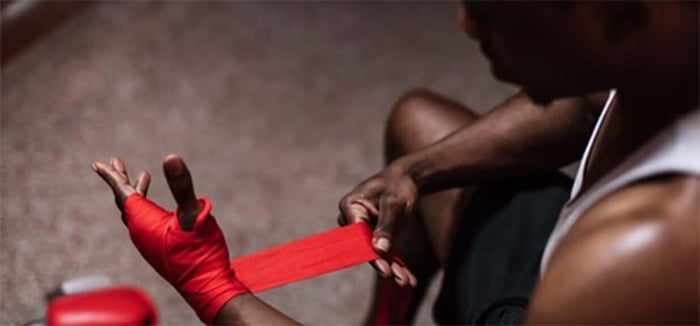
Hand wraps stabilise your wrists and protect the small bones in your hands.
Even the best gloves cannot fully protect your hands without wraps underneath.
Choose:
• 4–4.5 metre cotton or elasticated wraps
• Hook-and-loop fastening
• Breathable fabric
Consistency matters. Wrap your hands the same way every session to build structure and confidence.
Shop our Boxing Hand Wraps collection to protect your hands properly.
3. Mouthguard (Gum Shield)
A mouthguard becomes essential once drills involve movement, partner work or sparring.
Even outside full sparring, accidental clashes happen.
A boil-and-bite mouthguard is ideal for beginners and provides secure protection at an affordable price.
Look for:
• Snug fit without restricting breathing
• Secure hold during movement
• Durable outer shell
Browse our Boxing Mouthguards to stay protected as training intensity increases.
4. Boxing Boots
Footwork is one of the most overlooked aspects of beginner equipment.
Boxing boots provide:
• Thin, grippy soles
• Lateral ankle stability
• Better pivot control
• Strong floor connection
Running shoes are too cushioned and reduce stability when pivoting or shifting weight.
If you want to improve movement early, explore our Boxing Boots collection for footwear designed specifically for the sport.
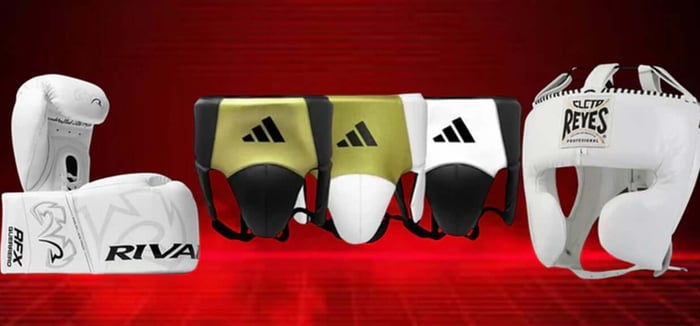
5. Protective Gear (As You Progress)
Additional protection becomes important as training intensity increases.
Depending on your level, you may need:
• Groin guard
• Headguard (for supervised sparring)
• Chest protection (where applicable)
These are not always necessary on day one, but they become important once contact increases.
Browse our Protective Boxing Gear collection when you are ready to advance safely.
If you are aiming to enter amateur competition, read our Amateur Boxing Equipment for Competitions guide to understand regulation requirements early.
Choosing the Right Glove Weight
Glove weight depends on training purpose and bodyweight.
14oz
Most common beginner size
Balanced protection and feedback
Suitable for general training
16oz
Standard for sparring
Better shock absorption
Often required by UK gyms
Beginners rarely need gloves lighter than 12oz.
If your wrists feel unstable, move up in weight rather than down.
Protection first. Speed comes later.
Leather vs Synthetic Gloves
Material affects durability and feel.
Leather Gloves
• Break in naturally
• Last longer with proper care
• Maintain padding structure better
Synthetic Gloves
• More affordable
• Easy to maintain
• Ideal for beginners training 1–3 times per week
Both can perform well if construction quality is strong. Always check stitching, strap strength and padding consistency.
Training Gear vs Sparring Gear
Not all equipment is interchangeable.
Training gloves are built for:
• Heavy bag work
• Pad sessions
• Repeated impact
Sparring gloves are softer and designed to protect your partner. They are typically 16oz for adults.
Never use professional fight gloves for sparring.
If you are preparing for partner work, browse our Sparring Boxing Gloves collection.
Recommended Beginner Brands (UK)
When starting out, focus on reliability and wrist structure rather than hype.
Strong beginner-friendly options include:
• Pro Box – Durable and straightforward
• Adidas – Reliable build quality and fit
• Tuf Wear – Solid wrist support
If you are progressing into amateur boxing, brands like Sting are widely used in structured development pathways across the UK.
All available within our Boxing Gloves collection.
Beginner Buying Strategy
If your budget is limited, prioritise:
Gloves
Hand wraps
Mouthguard
Boots
Headguards and additional protection can follow once sparring becomes part of your routine.
Spend on wrist support and padding first. That is where injury prevention matters most.
Common Beginner Mistakes
Avoid:
• Choosing gloves that are too light
• Training in running shoes
• Skipping hand wraps
• Over-tightening wraps
• Buying the cheapest option without checking structure
Most early setbacks come from poor equipment decisions — not lack of effort.
Final Thoughts
You do not need a full professional kit to begin boxing.
Start with quality gloves, wrap your hands properly and use footwear designed for movement. Add protective gear as your training progresses.
The right boxing equipment for beginners removes distractions, reduces injury risk and allows you to focus on improving technique.
Explore our full Boxing Equipment range and build your kit properly from day one.
Train smart. Protect your hands. Build correctly.
FAQs
What boxing equipment do beginners need?
Most beginners need boxing gloves, hand wraps and a mouthguard to start safely. As training progresses, boxing boots and protective gear such as a groin guard or headguard may be required.
What size gloves should a beginner use?
Most adult beginners in the UK start with 14oz gloves for general training. If sparring becomes part of training, 16oz gloves are usually required by gyms.
Do beginners need boxing boots?
Boxing boots are not mandatory on day one, but they significantly improve footwork, balance and pivot control compared to regular trainers.
Is expensive boxing equipment necessary for beginners?
Not necessarily. Beginners should prioritise proper wrist support and quality padding over premium branding. Durable, well-constructed entry-level gear is sufficient to start.
Can I use the same gloves for bag work and sparring?
It is possible at first, but long term it is safer to own separate gloves for sparring to protect training partners and maintain padding integrity.