This guide covers amateur competition gloves in the UK. It explains what happens at ringside, why you never compete in your own gloves, and when owning the confirmed event model can help your preparation.
Quick Answer: What Gloves Are Used in Amateur Boxing?
Amateur boxers compete in approved competition gloves supplied at ringside by the event organiser. Under England Boxing’s 2026 rules, use 10oz at 65kg or below and 12oz above 65kg. If the bout crosses the threshold, both boxers use 12oz. You do not use your own gloves in the bout itself.
Do Amateur Boxers Use Their Own Gloves?
No. Official competition gloves are supplied and controlled by the event organiser. Both boxers in a bout use the matching approved model, allocated and supervised by officials at ringside.
Your personal competition pair is for preparation only. If you have confirmed the model supplied at your event, a personal pair gives you familiarity with its feel, balance and profile. But when you step through the ropes, you wear what the organiser provides.
Why Own Competition Gloves If They Are Supplied Ringside?
Competition gloves feel noticeably different from the training and sparring gloves you use every day. Confirm the model supplied at your event; owning a personal pair of that model lets you build familiarity well before bout day.
Padding position and balance
Competition gloves concentrate more padding toward the front of the fist. The weight distribution is different from a sparring glove. Training in the same model means you understand how the glove sits and moves before you compete.
Fist position and thumb feel
The way your fist closes inside a competition glove is distinct. The thumb placement and angle feel different. You want this to be familiar, not a surprise on the night.
Faster return to guard
Competition gloves are lighter and more compact than sparring gloves. The lower weight changes how they feel as your hands return to guard. Practising in the same model lets you adjust your timing and defensive rhythm.
Compact profile
The slimmer profile changes how you catch shots and how your guard frames. It is less forgiving than a bulkier sparring glove. Time spent in the competition model helps you adapt.
Warm-up in the same model
Many boxers warm up backstage in their own pair of the approved model before changing into the official ringside gloves. Confirm that your event allows this and which model it supplies.
Controlled pad work during fight camp
Using a personal pair of the confirmed event model for controlled pad work during camp lets you feel combinations at competition pace in the correct glove. You build confidence and familiarity without relying on guesswork.
The purpose is familiarity and confidence. You are not breaking the gloves in or conditioning your hands. You are making sure the competition glove feels like second nature when it matters.
England Boxing Competition Glove Weights
| Competition weight | Glove weight |
|---|---|
| 65kg and under | 10oz |
| Over 65kg | 12oz |
If a bout crosses the threshold, the event applies the relevant current England Boxing rule for both boxers. The coach should confirm the final glove weight during matching and the event briefing.
Rules source: England Boxing Technical & Competition Rules 2026, section 8.2 (checked 19 September 2026).
Do All UK Events Use the Same Rules?
No. England Boxing domestic rules should not automatically be applied to Welsh Boxing, Boxing Scotland, international tournaments or World Boxing events.
Glove requirements may depend on age, sex, competition weight, event category and the governing body's current rules. What applies at an England Boxing development show may differ from a Boxing Scotland championship or a World Boxing tournament.
The coach should always confirm the specific glove requirements for the specific event. Do not assume.
What Happens to the Gloves Ringside?
The process is controlled and consistent. Here is how it works at a typical sanctioned event.
- The organiser selects an approved model for the event.
- The required glove weight is determined by the governing body's rules for that bout.
- Matching gloves are allocated to both boxers.
- Gloves are supplied and controlled at ringside by event officials.
- Officials supervise fitting and closure to ensure compliance.
- The boxer enters the bout in the official event gloves.
- Personal competition gloves remain for preparation and warm-up only.
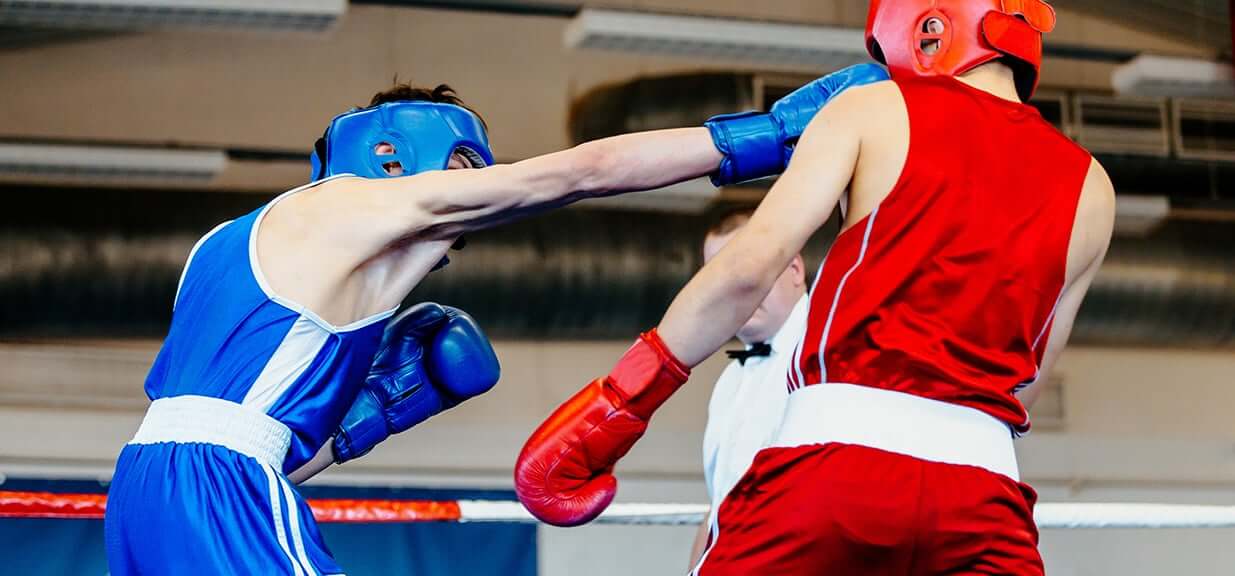
Red and blue gloves are commonly used to match corners, making it easier for officials and judges to identify scoring shots.
What Approved Competition Gloves Feel Like
If you have only ever trained in standard bag gloves or sparring gloves, competition gloves feel different. Here is what you will notice.
- More padding concentrated toward the front of the fist.
- Less bulky overall than sparring gloves.
- A different fist position when you close your hand fully.
- A different thumb feel and angle.
- Faster return to guard due to lighter weight and compact profile.
- A different feel when catching pads, especially on hooks and uppercuts.
- A more compact wrist and cuff section.
- A noticeable difference during warm-ups if you are used to heavier training gloves.
Spending time in the confirmed event model during camp can help you become familiar with these differences. A personal pair is optional, so discuss it with your coach.
How to Use Competition Gloves in Fight Camp
Competition gloves are not for everyday training. Check the specific model’s intended use before bag work. Never use 10oz or 12oz for adult sparring, including technical rounds. Use them with purpose and at the right times during camp.
Early fight camp
Occasional controlled pad work. Basic combinations at moderate pace. Focus on fist position, thumb feel and how the glove sits on your hand. Get used to the weight and balance.
Middle of camp
Competition-paced pad rounds. Movement and timing drills. Start to replicate bout intensity in short bursts so the glove feels natural at speed.
Final lead-up
Short familiarisation sessions. Pre-bout warm-up practice. Run through your warm-up routine in the competition gloves so the process is rehearsed and automatic.
Bout day
If you own the confirmed event model and the organiser allows it, warm up in your personal pair. Complete your pad work and shadowboxing backstage. Then change into the official ringside gloves when called forward by officials.
Warming Up Before the Bout
Where the organiser permits it, the boxer can warm up in a personal pair of the confirmed event model. This is the moment your personal competition gloves earn their place in the kit bag.
A typical pre-bout warm-up includes:
- Shadowboxing to raise the heart rate and loosen the shoulders.
- Controlled pad rounds with the coach at building intensity.
- Short technical combinations to sharpen timing.
- Guard and hand-return drills to reinforce defensive habits.
- Movement and timing work to settle nerves and find rhythm.
The coach controls warm-up intensity and timing. The goal is to be sharp and ready, not tired. Once officials call you forward, you switch into the official event gloves having followed your coach’s preparation plan.
Sting and Other Approved Competition Models
Approval is model-specific, not brand-wide. A brand may produce dozens of gloves, but only specific models hold competition approval. Always check the exact model.
Sting Competition Approved Gloves 2.0
The Sting Competition Approved Gloves 2.0 are a dedicated amateur competition glove. Available in 10oz and 12oz to match both weight categories.
- Premium leather construction for durability across a full fight camp cycle.
- Multi-layer foam system providing the forward-focused padding profile of an approved competition glove.
- Designed specifically for amateur competition, not adapted from a training model.
- Suitable for controlled pad work, competition-specific drills and pre-bout warm-ups.
The boxer still competes in the official event gloves supplied at ringside. This personal pair is for preparation and familiarity.
Read the full Sting Competition Approved Gloves review for a detailed breakdown. You can also browse the wider Sting collection and the amateur boxing equipment collection for related gear.
For guidance on fitting competition gloves alongside your other training gloves, see the amateur training gloves guide.
Competition Gloves Versus Training and Sparring Gloves
Competition gloves serve a different purpose from your everyday training gloves and your sparring gloves. Here is how they compare.
| Feature | Training or bag gloves | Sparring gloves | Amateur competition gloves |
|---|---|---|---|
| Main use | Bags, pads, everyday training | Controlled partner work | Sanctioned bouts and competition preparation |
| Profile | Varies by model | Usually broader around striking surface | More compact and forward-focused |
| Weight | For bags and pads, adult beginners under 65kg should start with 14oz; those over 65kg should consider 14–16oz, with hand size and comfort checked. Intermediate and advanced adults may prefer 10–12oz or bag mitts, depending on preference and hand condition. | For adult sparring, 16oz is standard below 90kg; 14oz is only for adults under 65kg with coach or gym permission. At 90kg or above, 18oz is standard, subject to coach or gym rules. | 10oz at 65kg or below; 12oz above 65kg. If a bout crosses the threshold, both use 12oz. Confirm the event rules. |
| Personal ownership | Yes | Yes | Personal pair for preparation; official pair supplied ringside |
| Heavy bag use | Yes, when designed for it | Avoid repeated heavy-bag use | Not for routine heavy-bag sessions |
| Sparring use | Only if specifically suitable | Yes | No |
The three-pair framework
Active amateurs benefit from owning three distinct glove types. Each serves a clear role.
| Glove role | Main use |
|---|---|
| Training or bag gloves | Bags, pads, drills and everyday gym work |
| Dedicated sparring gloves | Controlled partner work |
| Approved amateur competition gloves | Bout preparation, controlled pad work and pre-bout warm-ups |
For help choosing the right sparring gloves, see the best sparring gloves guide. For a broader overview of glove types and how they fit together, the glove types guide and size guide are both worth reading. The boxing gloves explained guide ties everything together.
Other Equipment Needed for Competition
Competition gloves are one part of a larger kit list. You will also need hand wraps, a mouthguard, groin protection, approved competition clothing, boxing boots and a headguard where required by the governing body's rules.
The full amateur boxing equipment for competitions guide covers every item in detail, including what is supplied and what you must bring yourself. You can also browse the amateur boxing equipment collection to see what is available.
Frequently Asked Questions
Do amateur boxers use their own gloves?
No. Official competition gloves are supplied and controlled by the event organiser at ringside. Every boxer in the bout wears the same approved model provided by the event.
Why should I own competition gloves if they are supplied ringside?
After confirming what your event supplies, owning a personal pair of that model lets you train, complete controlled pad work and warm up in a glove that feels familiar. You build confidence with the weight, padding position and fist feel before bout night. You will still compete in the official gloves supplied by the organiser.
Do amateur boxers use 10oz or 12oz gloves?
Under current England Boxing domestic rules, boxers at 65kg and under use 10oz, and boxers over 65kg use 12oz. If the bout crosses the threshold, both boxers use 12oz. Other governing bodies or events may differ. The coach should confirm the exact requirement for the specific event.
Can I warm up in my own competition gloves?
Where the organiser allows it, you can warm up in a personal pair of the confirmed event model before changing into the official ringside gloves. This is one of the main reasons to own a personal pair.
Do all UK amateur events use the same glove rules?
No. England Boxing, Welsh Boxing, Boxing Scotland and World Boxing may each have different requirements regarding glove weight, approved models and other specifications. The coach should confirm the rules for the specific event well in advance.