Written by the FightGear Team. FightGear is a specialist boxing retailer supplying serious fighters across the UK.
Every fighter who has ever stepped on the scales knows the final days before weigh-in can define a fight. A boxing sauna suit is one of the oldest, most practical tools in the sport for managing weight and pushing conditioning to another level. This guide covers everything: how sauna suits work, which materials suit boxing, how professionals use them in fight camp, and which suit from our catalogue matches your level. If you train, spar, or compete, this is the only boxing-first sauna suit resource you need.
What Is a Boxing Sauna Suit and How Does It Work?
A boxing sauna suit is a full-body garment, typically a jacket and trousers, designed to trap body heat and accelerate sweat production during training. The principle is straightforward. Your body generates heat when you move. Normally, sweat evaporates and cools you down. A sauna suit creates a sealed microclimate around your skin, preventing that evaporation and forcing your core temperature higher. Your sweat rate increases dramatically as your body works harder to cool itself.
For boxers, this means faster fluid loss during training sessions, which translates to temporary weight reduction on the scales. It also means your cardiovascular system is placed under greater stress, similar to training in extreme heat. That additional stress, managed correctly, can improve your heat tolerance and mental toughness over time.
The key word is temporary. The weight you lose in a sauna suit is water, not fat. It returns when you rehydrate. This makes sauna suits a precision tool for fight week, not a shortcut for long-term weight loss. Understanding that distinction is the foundation for using one safely and effectively.
Browse our full range of boxing sauna suits to see what is available for every level of fighter.
Weight Cutting vs Active Conditioning: Two Reasons Boxers Use Sauna Suits
Boxers reach for a sauna suit for two distinct reasons, and confusing them leads to poor decisions.
Passive weight cutting is the traditional use. You wear the suit during low-intensity activity, sometimes just walking or light shadow boxing, purely to shed water weight before weigh-in. The goal is scale numbers, not performance. Sessions are short, controlled, and timed around your fight week schedule. This is a precise, calculated process supervised by a coach or nutritionist.
Active conditioning is a different approach entirely. Here, you wear the sauna suit during a structured boxing workout, such as pad rounds, bag work, or footwork drills, to intensify the cardiovascular demand. The added heat stress forces your heart to pump harder, your lungs to work more, and your mind to push through discomfort. Over weeks of progressive use, this builds the kind of deep endurance that keeps your punch output high in the championship rounds.
If you are cutting weight for a fight, you need a plan tied to your weigh-in date. If you are building conditioning, you need a progressive training structure. Knowing which camp you fall into determines how you pick your suit, how long you wear it, and how hard you train in it. The rest of this guide addresses both paths.
Pair your conditioning work with the right boxing equipment so every session is set up for maximum output.
PVC vs Neoprene: The Right Material for Boxing Training
The two dominant sauna suit materials are PVC and neoprene, and each behaves differently in a boxing gym.
PVC suits are lightweight, fully sealed, and trap heat aggressively. They are effective for passive weight cutting because they maximise sweat output quickly. The trade-off is durability and range of motion. PVC can feel stiff when you throw combinations and tends to crack at the seams after repeated use. It is harder to clean thoroughly, and the material holds odour if not wiped down after every session.
Neoprene suits offer more stretch, better durability, and a closer fit that moves with your body. When you are throwing hooks on the heavy bag or pivoting on the pads, neoprene allows your shoulders, elbows, and hips to rotate without restriction. Heat retention is still high, though slightly less aggressive than PVC. Neoprene is easier to rinse, quicker to dry, and lasts longer under the repeated wash cycles a boxing gym demands.
For fighters who plan to train actively in their suit, throwing punches, working footwork, and drilling combinations, neoprene is the stronger choice. For fighters who need maximum heat during low-activity weight cuts, PVC does the job. Consider what your primary use case is before choosing.
Explore our wider boxing clothing range for more training apparel built around ring demands.
Inside the Fight Camp: How Elite Boxers Use Sauna Suits
Sauna suits are not a fringe tool. They sit at the centre of professional fight preparation at the highest level.
Floyd Mayweather famously wore sauna suits during late-night road work sessions, layering the suit under a hoodie to drive sweat rates even higher on long runs through Las Vegas. His conditioning was legendary, and the sauna suit was a consistent part of building that engine. The additional cardiovascular load during those sessions helped Mayweather maintain a relentless pace across 12 rounds, fight after fight.
Canelo Alvarez has been photographed training in sauna suits during camp, particularly during bag work and pad sessions. His team integrates the suit into specific conditioning blocks, not as an afterthought but as a programmed element alongside altitude training and structured sparring.
What separates professional use from amateur guesswork is structure. Elite fighters do not simply put on a sauna suit and hope for the best. Their coaching teams plan which sessions involve the suit, for how long, and at what intensity. The suit is periodised into the training block just like sparring rounds or strength work. Hydration is monitored before and after every session. This level of precision is what makes the tool effective rather than dangerous.
The lesson for every fighter: use the suit with a plan, not on impulse.
Boxing Weight Cut Timeline: Five Days Out to Weigh-In
A structured weight cut gives you control. Here is a boxing-specific framework built around a typical fight week.
Five days out. You should be within 3 to 5 percent of your target weight. Training intensity is still moderate. Wear your sauna suit for one conditioning session, 20 to 30 minutes, focusing on shadow boxing or light pad work. Monitor how much fluid you lose and replace it fully. This session is diagnostic. It tells you and your coach how your body is responding.
Three days out. Training volume drops. You are managing energy, not building fitness. One sauna suit session of 15 to 25 minutes at low intensity, such as walking or very light shadow boxing, helps shed residual water. Fluid intake is now being tapered under guidance from your coach or nutritionist.
One day out. Final water weight manipulation. A short, low-intensity sauna suit session of 10 to 15 minutes can remove the last fraction of a kilogram. Keep a coach or training partner present at all times. Weigh yourself before and after. Stop the moment you hit your target.
Critical rule: never spar in a sauna suit during fight week. Your reaction time, coordination, and ability to take a shot are all compromised when you are dehydrated. Sauna suit work during fight week is conditioning and weight management only. Save sparring for earlier in camp when you are fully hydrated and fuelled.
Beginner, Amateur, and Professional: Level-Based Guidance for Sauna Suit Use
Your experience level determines how you should approach sauna suit training.
Beginners. If you are new to boxing, start without a sauna suit. Build your baseline fitness first. Once you are comfortable completing a full session of bag work and shadow boxing without excessive fatigue, introduce the suit for short blocks of 10 to 15 minutes during low-intensity drills. Use it once per week maximum. Focus on how your body responds. If you feel dizzy, nauseous, or confused, stop immediately.
Amateur competitors. You have ring experience and are managing weight for bouts. Sauna suits become a practical tool for two to three sessions per week during the final three weeks of camp. Wear the suit during conditioning rounds, not sparring. Sessions of 20 to 30 minutes at moderate intensity are effective. Track your weight before and after each session so you understand your personal sweat rate.
Important: Amateur Boxing and Same-Day Weigh-Ins
If you compete in amateur boxing in the UK, sauna suits are not a practical weight-cutting tool. Amateur bouts use same-day weigh-ins, meaning you step on the scales on the morning of your fight. That leaves you with a matter of hours — sometimes fewer than four — to rehydrate and refuel before you box. That is not enough time to safely recover from any meaningful dehydration. Cutting water weight the night before or morning of a same-day weigh-in and then trying to rehydrate in time is a recipe for impaired performance at best and a genuine health risk at worst. The maths simply does not work in your favour. Use a sauna suit for conditioning in amateur camp if you want, but do not use it as a weight-cutting tool if your weigh-in is the same day as your bout.
Professional fighters. You are working with a coaching team and likely a nutritionist. The sauna suit is integrated into your periodised training plan. Sessions can run 30 to 45 minutes at higher intensities, including structured pad work and heavy bag rounds. Your team monitors hydration markers, session duration, and recovery between training days. At this level, the suit is a precision instrument, not a blunt tool.
Every level benefits from the same principle: start conservatively, increase gradually, and never train alone in a sauna suit.
Boxing Weight Classes and Sauna Suit Sizes: A Fighter's Framework
Generic sizing charts based on height and weight miss the point for boxers. You need to match your sauna suit to your fighting weight class and body composition.
Flyweight to bantamweight (49kg to 54kg). A size small provides the close fit needed to trap heat effectively without excess material bunching around your arms and legs. Loose fabric interferes with fast hand speed and footwork.
Featherweight to lightweight (57kg to 63.5kg). Size small or medium depending on your frame. If you carry broader shoulders relative to your weight class, go medium. The suit should be snug, not restrictive.
Light welterweight to middleweight (64kg to 72.5kg). Most fighters here fit a medium or large. You need enough room through the shoulders and chest to throw full combinations without the suit pulling across your back.
Super middleweight to cruiserweight (76kg to 90.7kg). Large or extra large. At this weight, a suit that is too tight restricts trunk rotation on hooks and uppercuts. Prioritise a suit with stretch in the torso.
Heavyweight (90.7kg and above). Extra large or above. Range of motion is everything. A heavyweight throwing power shots needs unrestricted shoulder movement.
When in doubt, size up. A suit that is slightly loose still traps heat effectively. A suit that is too tight limits your movement, changes your punch mechanics, and creates unnecessary fatigue in the wrong muscle groups.
A Structured Sauna Suit Boxing Workout: Rounds, Rest, and Intensity
This workout is designed for fighters with at least three months of consistent boxing training. Adjust round duration and rest based on your level.
Round 1: Shadow boxing (3 minutes). Light intensity. Focus on footwork, jab placement, and finding your rhythm. The suit begins trapping heat. Keep your breathing controlled.
Round 2: Heavy bag combinations (3 minutes). Moderate intensity. Work three-to-four punch combinations with movement between bursts. Your heart rate climbs. Sweat production accelerates.
Round 3: Pad work or double-end bag (3 minutes). Moderate to high intensity. Precision matters. Focus on clean technique despite rising body temperature. This round tests your concentration under heat stress.
Round 4: Body shot drills on the heavy bag (3 minutes). High intensity. Hooks, uppercuts, and level changes. The suit will feel heavier as sweat accumulates. Push through with purpose.
Round 5: Defensive footwork and head movement (3 minutes). Lower intensity to bring your heart rate down while staying active. Slip, roll, pivot.
Rest: 60 seconds between rounds. Sip water during rest. Do not gulp.
Total session time is approximately 20 minutes of active work. Beginners should start with three rounds and build up. Wrap your hands properly before any bag or pad work. Pick up quality boxing wraps if yours are due for replacement.
Which Boxing Sauna Suit Should You Buy?
Three suits in the FightGear catalogue cover every fighter profile. Use the breakdown below to match your level to the right suit, then go straight to the product page to place your order.
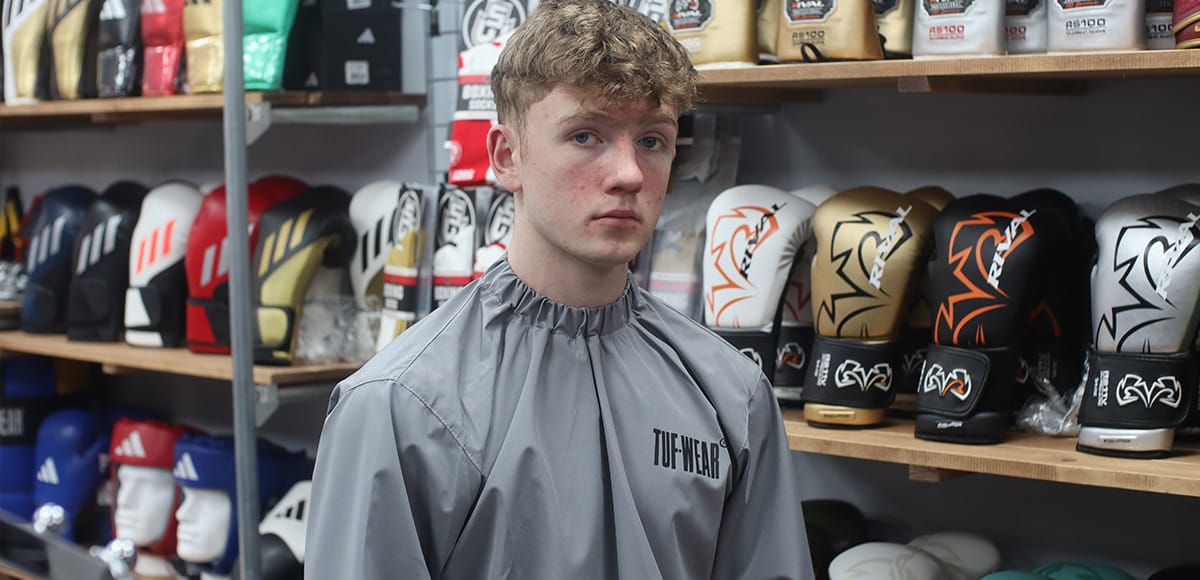
For fighters starting out: the Tuf Wear Lightweight Sweat Sauna Suit at £39.99 is a straightforward, durable PVC suit that delivers effective heat retention for conditioning sessions and early weight management. It does the job without complication. Explore the wider Tuf Wear boxing gear range for more from this trusted brand.
For competitive amateurs and regular trainers: the ADIDAS Sauna Suit at £49.99 steps up in fit and material quality. It offers better range of motion for active boxing drills and holds up well across frequent training sessions. A strong performance option from the Adidas boxing range.
For professionals and serious competitors: the BOXRAW Hagler Sauna Suit 2.0 at £99.99 is the premium choice. Built with a precision fit and durable construction designed for high-intensity fight camp sessions. The Hagler 2.0 moves with you through combinations, bag work, and pad rounds without restriction. See the full BOXRAW collection for more professional-grade training gear.
Not sure which to choose? If you are training consistently and entering bouts, the ADIDAS Sauna Suit at £49.99 is the best starting point for most fighters. If you are preparing for professional competition, invest in the BOXRAW Hagler 2.0 — it will last a full fight camp and beyond. Browse the complete boxing sauna suits collection to compare all options side by side and order with confidence.
Frequently Asked Questions
Can I spar in a boxing sauna suit?
No. Sparring in a sauna suit impairs your reaction time, coordination, and ability to absorb shots safely. Wear it during conditioning, bag work, and shadow boxing only. Protect yourself with proper boxing protective gear during sparring.
How much weight can I lose in a single sauna suit session?
Most fighters lose between 0.5kg and 2kg of water weight per session depending on duration, intensity, and individual sweat rate. This weight returns fully once you rehydrate.
How often should I wash my boxing sauna suit?
After every session. Rinse the inside and outside with cool water, wipe down with a mild antibacterial solution, and hang to air dry completely before storing. This prevents odour and extends the life of the material.
Is a sauna suit safe for beginners?
Yes, when used conservatively. Start with 10 to 15 minute sessions at low intensity, stay hydrated, and never train alone. Stop immediately if you feel dizzy, nauseous, or disoriented. Build duration gradually over several weeks.