Written by the Fight Gear Team. We have hands-on experience fitting every piece of Sting headgear we stock.
Getting the right Sting headgear size is crucial. This guide provides exact measurement steps, the full Sting size chart, model-specific fit notes, and adjustment techniques so your headgear protects as designed.
Why Correct Sizing Matters
Ill-fitting headgear fails at its job. A guard that rides too high exposes your temples, while one that drops too low blocks your vision and delays reactions. An oversized guard shifts on impact, and an undersized one restricts jaw movement and creates distracting pressure points.
For amateur competitors, World Boxing-sanctioned bouts require approved headgear that fits within specific parameters. A sloppy fit can mean failing a pre-fight gear check.
Whether you train casually or compete nationally, the right size is the foundation of your boxing headgear choice.
Measuring Your Head
Accurate measurement is essential. Skip it, and you gamble with your protection.
How to Measure
Use a flexible fabric tape measure (or string and a ruler). Position it around the widest part of your skull—about 2.5 cm above your eyebrows, passing over the slight bump at the back of your head. Keep the tape level.
Measure with your hair as you typically wear it for training. Take the measurement twice, pulling the tape snug but allowing one finger underneath. Record in centimetres.
Sting Headgear Size Chart
Match your head circumference to the correct size below for all Sting boxing equipment headgear.
| Size | Head Circumference (cm) | Head Circumference (inches) |
|---|---|---|
| S | 50 – 52 cm | 19.0 – 20.5 in |
| M | 52 – 56 cm | 20.5 – 22.1 in |
| L | 56 – 59 cm | 22.1 – 23.2 in |
| XL | 59 – 63 cm | 23.2 – 25.0 in |
Between Two Sizes?
If you land on a boundary (e.g., exactly 56 cm):
- Size Up: Generally, if you're on a boundary or within 0.5 cm of the upper limit, size up. Loose headgear can be adjusted; tight headgear creates pressure points.
- Size Down: If you have a narrow/oval head and barely touch the lower limit of the larger size, the smaller size may offer a more secure fit.
- Use Case: Heavy sparring demands a snugger fit to prevent shifting. Light technical work favors comfort (roomier). Competition requires the tightest secure fit without pressure.
Fit Checklist
Run through this checklist before your first session:
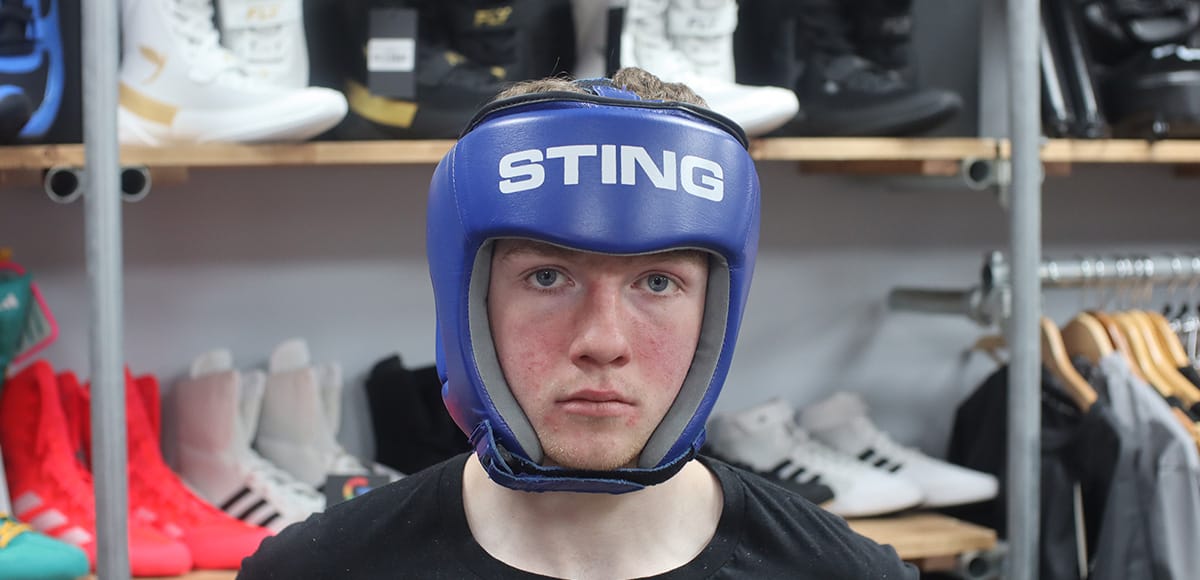
- Forehead: Padding sits ~one finger-width above eyebrows.
- Temples: Side panels fully cover both temples without gaps.
- Cheeks: Guards rest firmly against cheekbones without pinching.
- Chin Strap: Snug under the jaw (one finger space), not pressing the throat.
- Vision: Peripheral vision is clear when looking left and right.
- Shake Test: Headgear moves with your skull when shaking or nodding.
Signs of a Bad Fit
Too Big: Rotates on impact, chin strap gaps, requires constant readjustment, blocks peripheral vision, or lifts at the back when tucking your chin.
Too Small: Pressure points on forehead/temples, restricted jaw movement, red marks after use, chin strap pulls against throat, or causes headaches.
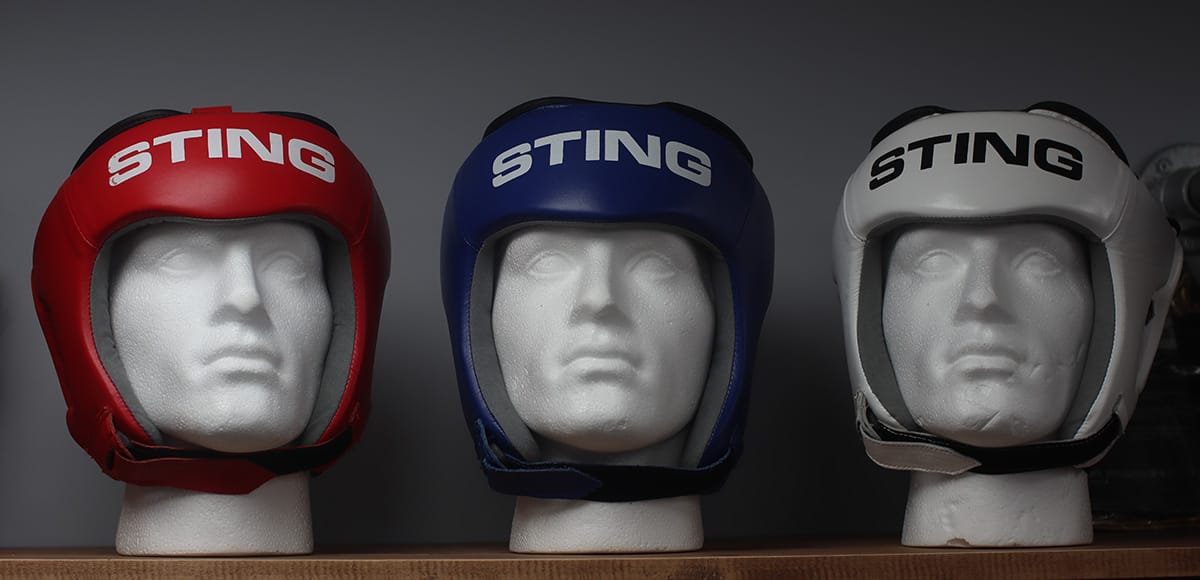
Model Comparisons
STING Competition Approved Head Guard 2.0
The STING Competition Approved Head Guard 2.0 runs true to size with a structured, firm fit. It features an open-face design for visibility, rear lacing, and a Velcro chin strap. It feels slightly snug initially but loosens marginally. If between sizes, stay true or size up.
STING Orion Gel Headguard
The STING Orion Gel Headguard uses gel-infused padding for a softer initial feel and fuller cheek coverage. It fits slightly more generously than the Competition model, accommodating wider/rounder heads well. If between sizes with a narrow head, consider sizing down.
Browse our full headgear range or consider the Cleto Reyes Headguard for a premium alternative. Browse our full Boxing Protective Gear collection to compare options.
Adjustment Tips
- Rear Lacing: Loosen fully, put on, and pull evenly from bottom to top until flush against the back of your head. Tie securely.
- Chin Strap: Fasten last. It should sit under your jawbone, snug enough for one finger space.
- Top Strap: Adjust to eliminate vertical play.
- Re-Check: Re-evaluate fit after warming up, as your head may expand slightly and gel padding (like in the Orion) warms up.
Recommendations by Skill Level
Beginner
Prioritize a secure fit and visibility. The STING Orion Gel Headguard is ideal, offering forgiving gel padding and confidence-boosting cheek coverage.
Amateur Competitor
If competing under World Boxing rules (Boxing England, Welsh Boxing, Boxing Scotland), you need approved gear. The Competition Approved Head Guard 2.0 is World Boxing approved. Precise sizing is mandatory to pass pre-fight checks. Browse our amateur boxing equipment for more. For a full breakdown of all essential protective equipment, read our complete boxing protective gear guide.
Advanced Fighter
Fit under sustained pressure is key. A well-adjusted headguard should feel like it disappears. The Hit N Move Air Armor Precision Headgear is a strong performance-focused alternative.
Break-In & Lifespan
Expect a firm, snug fit initially. The Orion's gel adapts in 3-4 sessions, while the Competition's denser foam takes slightly longer. Over months, padding compresses and straps stretch slightly—compensate with minor adjustments.
Replace your headgear when adjustments no longer secure the fit, Velcro fails, foam flattens, or the shell cracks. Expect 12-18 months of durable performance with regular use (2-3 times/week).
Which Should You Order?
- Order the Competition Approved Head Guard 2.0 if: You compete in World Boxing/nationally sanctioned bouts, need approved gear, or prefer a firm, structured fit for hard sparring.
- Order the Orion Gel Headguard if: You train but don't compete, have a wider/rounder head, or want a softer break-in feel.
Between sizes? Size up on the Competition 2.0. For the Orion Gel, size down if narrow, size up if wide/round.
Still unsure? Contact the Fight Gear team with your measurements and intended use.