Table of Contents
- What is the best boxing headgear?
- What Makes the Best Boxing Headgear? Our Evaluation Criteria
- Best Boxing Headgear: Ranked Picks
- Does Boxing Headgear Prevent Concussions?
- Headgear Styles: Which Type Is Right for You?
- Common Boxing Headgear Mistakes
- Which Head Guard Should You Buy?
- FAQs
What is the best boxing headgear?
The best boxing headgear depends on your level and training context:
- Beginners starting to spar: STING Orion Gel Headguard
- Amateur competition: STING Competition Approved Head Guard 2.0
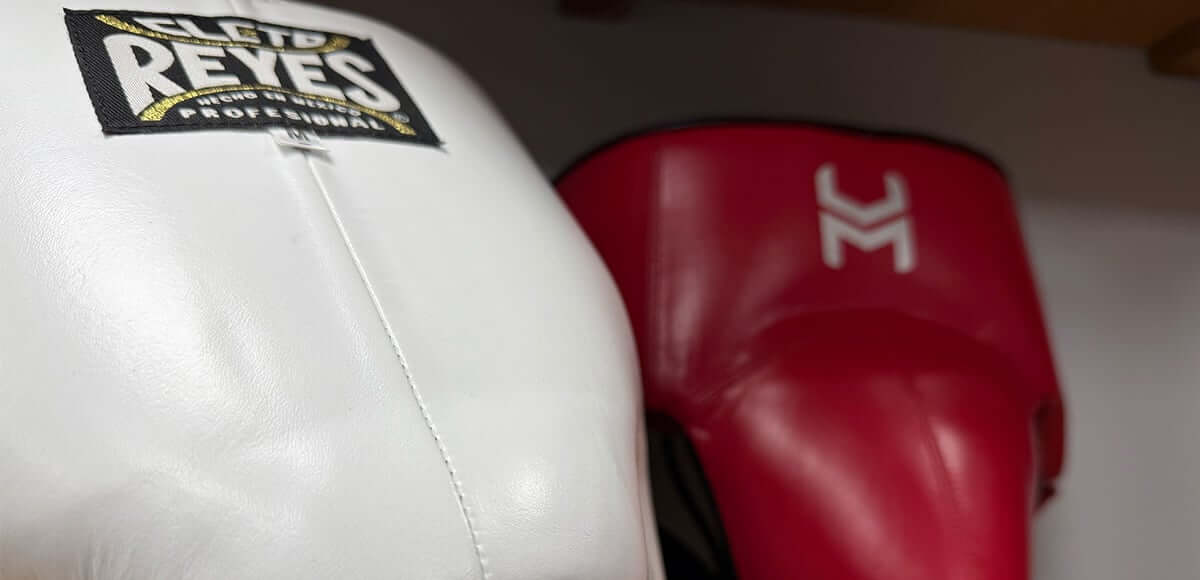
- Advanced and professional sparring: Cleto Reyes Headguard with Cheek Protectors
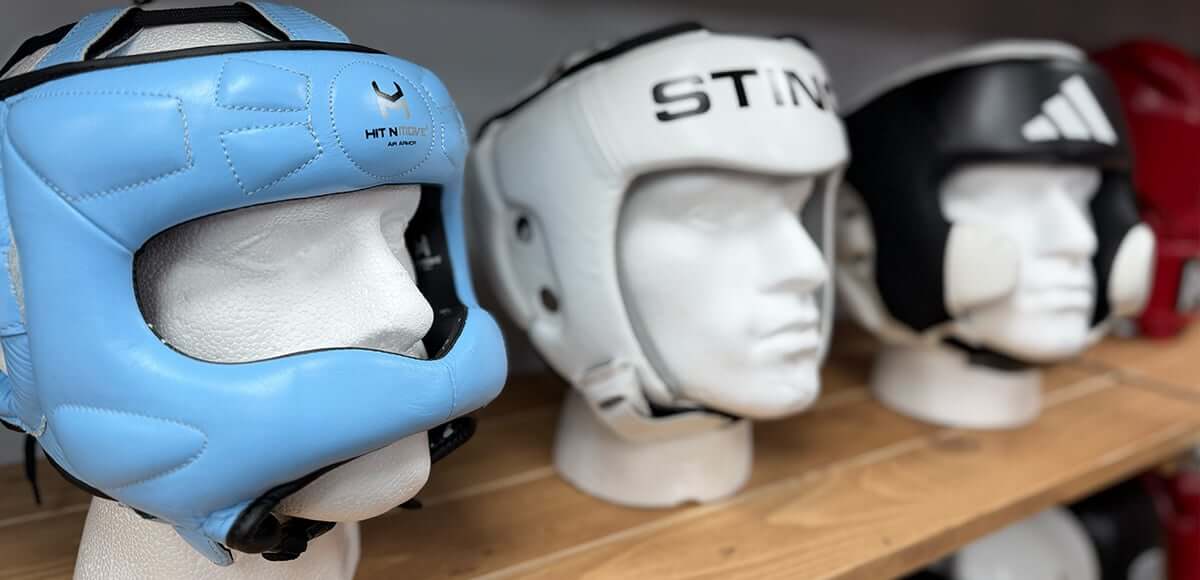
- Maximum facial protection: Hit N Move Face Saver Headgear
- Competition on a budget: ADIDAS IBA Licensed Head Guard
For the full picture on every category of boxing protection, see our complete boxing protective gear guide.
What Makes the Best Boxing Headgear? Our Evaluation Criteria
Not all boxing headgear is built to the same standard. We assess every head guard against six criteria before recommending it.
Protection: Padding density, impact distribution, and coverage area. A head guard that looks thick but bottoms out on contact is not absorbing what it should.
Visibility: Peripheral vision prevents the shots you never saw coming. Designs that tunnel your vision create a different kind of problem.
Fit and stability: A head guard that shifts during exchanges is dangerous. We assess closure systems, adjustability, and how well each design locks onto different head shapes.
Durability: Leather outlasts synthetic in most cases. We look at stitching quality, foam longevity, and how the headgear holds its shape after months of hard sparring.
Material quality: Genuine leather versus synthetic alternatives affects comfort, breathability, sweat handling, and how the headgear ages with regular use.
Competition approval: For amateur fighters, certification is non-negotiable. We flag which products carry current approval and which are gym-only options.
Best Boxing Head Guards: Top Picks at a Glance
| Head Guard | Style | Protection Level | Price | Best For |
|---|---|---|---|---|
| Cleto Reyes Headguard with Cheek Protectors | Cheek guard | Professional | From £199.00 | Advanced and professional sparring |
| STING Competition Approved Head Guard 2.0 | Open-face | Competition-grade | From £109.99 | Amateur competition |
| STING Orion Gel Headguard | Cheek guard | Intermediate | Mid-range | Beginner and intermediate sparring |
| Hit N Move Face Saver Headgear | Full-face | Maximum | Mid-range | Facial injury recovery, heavy sparring |
| ADIDAS IBA Licensed Head Guard | Open-face | Competition-grade | Mid-range | Amateur competition, value option |
Browse all boxing headgear at Fight Gear -- every model is selected for real sparring use, not casual training.
Best Boxing Headgear: Ranked Picks
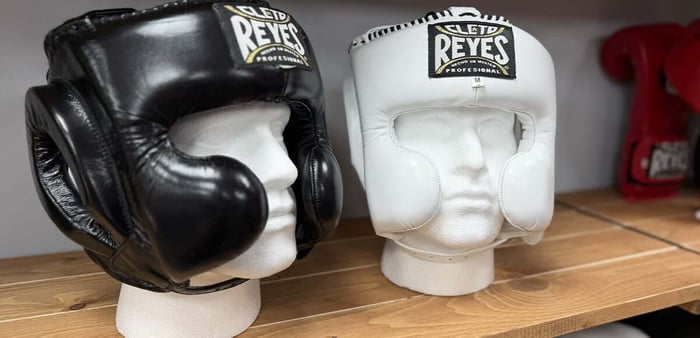
1. Cleto Reyes Headguard with Cheek Protectors -- from £199.00
The professional standard for boxing head guards. Hand-crafted in Mexico from genuine leather, with multi-layered foam that absorbs impact cleanly and cheek panels that protect without narrowing your peripheral vision. The leather moulds to your head shape over time, improving fit with use. This is the head guard trusted in serious sparring gyms worldwide.
Pros:
- Genuine leather construction that lasts years under heavy use
- Multi-layer foam maintains density after hundreds of rounds
- Cheek panels protect without reducing peripheral vision
- Improves fit over time as leather moulds to head shape
Cons:
- Premium price point
- Requires a break-in period of several sessions before the leather softens
- Not competition-approved (gym and sparring use only)
Fit and feel: Snug and secure once broken in. Minimal movement during exchanges. Feels substantial but not heavy.
Best for: Advanced and professional fighters in regular, hard sparring.
2. STING Competition Approved Head Guard 2.0 -- from £109.99
Carries official approval and is accepted at sanctioned amateur bouts. Lightweight with a secure rear lacing system and clean sightlines. Purpose-built for tournament use, and a reliable training option between competitions.
Pros:
- Officially approved for sanctioned amateur competition
- Lightweight design does not feel cumbersome during rounds
- Secure rear lacing system locks fit precisely
- Good visibility for competition use
Cons:
- Lighter padding than premium sparring options
- Not designed for the volume of hard daily sparring
- Lacing closure means slightly slower to put on and take off
Fit and feel: Light and close-fitting. Designed to stay in place through tournament conditions without feeling restrictive.
Best for: Amateur competitors who need approved headgear that passes equipment check.
3. STING Orion Gel Headguard
Gel-infused padding gives this head guard strong shock absorption for the price point. Solid cheek coverage, comfortable wear, and a forgiving fit that suits fighters still developing their sparring game.
Pros:
- Gel padding provides good shock absorption at an accessible price
- Cheek coverage without a full face bar
- Comfortable fit that suits a range of head shapes
- Good starting point without overcomplicating the decision
Cons:
- Synthetic construction has a shorter lifespan than leather options
- Not competition-approved
- Padding will compress faster than premium alternatives under heavy daily use
Fit and feel: Comfortable and settled. Less precise than leather options but forgiving enough for fighters learning to spar.
Best for: Beginner and intermediate fighters sparring regularly without competition requirements.
4. Hit N Move Face Saver Headgear
Full-face design with a protective bar across the nose and cheek area. Limits visibility compared to open-face styles but provides the highest level of facial coverage in our range.
Pros:
- Maximum facial coverage including nose and cheek bar
- Significantly reduces risk of cuts and facial injuries
- Useful during injury recovery without stopping sparring entirely
Cons:
- Reduced peripheral vision compared to open-face or cheek-guard styles
- Not suitable for competition use
- The face bar takes adjustment to get used to for some fighters
Fit and feel: Secure and well-padded. The face bar is noticeable initially but becomes less intrusive with use.
Best for: Fighters recovering from facial injuries, or those in very hard sparring environments who prioritise protection over visibility.
5. ADIDAS IBA Licensed Head Guard
Approved at a lower price point than the STING competition model. A practical choice for amateur fighters who need a certified head guard and are working within a tighter budget.
Pros:
- Approved for sanctioned competition at an accessible price
- Reliable construction from a well-known brand
- Decent visibility for competition use
Cons:
- Less refined fit and finish than the STING competition option
- Padding is functional but not exceptional for sparring volume
- Synthetic construction
Fit and feel: Straightforward and functional. Gets the job done for competition without additional features.
Best for: Entry-level competition use and training between bouts.
Does Boxing Headgear Prevent Concussions?
Every serious boxer asks this question and it deserves a direct answer.
Headgear does not prevent concussions. Research that influenced the decision to remove headgear from elite male amateur competition showed that headgear does not significantly reduce concussion risk. Concussions result from rotational acceleration of the brain inside the skull. Headgear padding can reduce linear force on impact but does little to prevent the rotational movement that causes concussive injury.
What headgear does well is reduce cuts, bruising, and the visible surface damage that accumulates over a sparring career. Fighters who spar without headgear collect more cuts, more swelling, and more time away from training dealing with facial repairs. That damage compounds over years. Headgear prevents it, even if it cannot prevent concussion.
Use headgear as one layer in a complete approach to protection. Good defensive habits, controlled sparring partners, and appropriate training load matter more for long-term brain health than any head guard on the market.
Headgear Styles: Which Type Is Right for You?
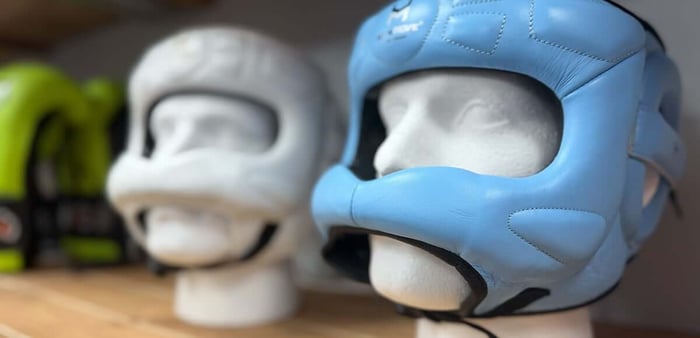
Open-face headgear leaves the face fully exposed below the forehead. The widest field of vision and the lightest feel. Common in professional gym sparring where experienced fighters prioritise sightlines over coverage.
Cheek guard headgear protects the cheekbones and temples while keeping the nose and mouth open. The Cleto Reyes Headguard with Cheek Protectors is the standard here. This is the most popular style for serious sparring because it balances visibility with meaningful protection.
Full-face headgear adds a bar or cage across the nose and cheekbones. Maximum coverage, reduced visibility. The Hit N Move Face Saver Headgear represents this style in our range.
Nose bar headgear adds a horizontal bar specifically across the nose bridge. Useful for fighters with a history of nose fractures who want targeted protection without a full cage.
Mexican-style headgear is minimalist. Thin padding, compact fit, closest to fighting without headgear. Preferred by professionals who want maximum visibility and have the defensive ability to manage the reduced coverage.
How to Choose the Right Boxing Headgear
The right choice depends on four factors.
Your level: Beginners benefit from a forgiving fit and full cheek coverage. The STING Orion Gel Headguard covers this. More experienced fighters can prioritise visibility and precision fit.
Your training purpose: If you are competing in sanctioned bouts, approved headgear is the only option. If you are sparring in the gym, the full range is available to you.
Your injury history: A history of nose fractures points toward a nose bar design. A history of cuts around the eyebrows points toward more generous forehead padding. Recovering from any facial injury points toward the Face Saver style.
Your visibility preference: Some fighters find open-face headgear makes them a better defensive boxer because they can see everything coming. Others prefer the confidence of cheek coverage. There is no universal answer, but most serious sparring fighters settle on cheek-protector style as the practical middle ground.
Common Boxing Headgear Mistakes
Choosing headgear that blocks your vision: A head guard that tunnels your peripheral vision makes you a worse defensive boxer. Protection that costs you sightlines is a trade-off, not an upgrade.
Buying too loose: A head guard that shifts during exchanges is more dangerous than no head guard because it blocks your vision at unpredictable moments. Fit is not optional.
Using competition headgear for daily sparring: Competition head guards are built for tournament conditions, not daily hard sparring volume. Using one as your everyday training guard accelerates wear and leaves you with degraded protection in competition.
Ignoring padding quality to save money: The padding is the product. A head guard with poor foam density compresses quickly and leaves you with an expensive hat that is not absorbing anything.
Not replacing worn headgear: Compressed padding does not recover. Once the foam has flattened, the head guard is not doing its job regardless of how it looks on the outside.
Competition Headgear: Current Approval Requirements
If you compete in sanctioned amateur boxing in the UK, your headgear must carry current approval from your governing body. In England, Wales, and Scotland, amateur boxing is now governed by World Boxing. Check with your club and event organiser for the most current approved equipment list before purchasing competition headgear.
The STING Competition Approved Head Guard 2.0 and the ADIDAS IBA Licensed Head Guard both carry competition approval. Always confirm with your event organiser that the model you purchase is accepted for your specific competition before fight day.
Headgear remains mandatory for junior competitors and female fighters in most jurisdictions. Senior male amateur competition removed the requirement some years ago.
When to Replace Your Head Guard
Compressed padding: Press the foam firmly with your thumb. If it does not spring back or feels flat and hard, the shock absorption is gone.
Cracked or peeling outer surface: Once the surface breaks down, moisture penetrates the padding and degrades it from the inside.
Persistent movement during sparring: If you have tightened every strap and the head guard still shifts, the internal structure has stretched beyond its design limits.
Torn stitching: Any visible stitching failure around the chin strap, velcro, or padding seams means structural integrity is compromised.
Timeline: Synthetic headgear used two to three times per week typically lasts 12 to 18 months. Premium leather options like the Cleto Reyes Headguard last two to three years or longer with proper care.
Which Head Guard Should You Buy?
Buy the Cleto Reyes Headguard with Cheek Protectors if you spar hard and regularly and want a head guard that will outlast everything else in your kit bag. It is the benchmark in its category.
Buy the STING Competition Approved Head Guard 2.0 if you compete in amateur bouts and need approved headgear that will pass equipment check and perform under tournament conditions.
Buy the STING Orion Gel Headguard if you are a beginner or intermediate fighter who spars regularly and wants solid protection at a manageable price.
Buy the Hit N Move Face Saver Headgear if facial protection is the priority, whether that is from injury recovery or the intensity of your sparring environment.
Buy the ADIDAS IBA Licensed Head Guard if you need competition-approved headgear and the STING model is outside your budget.
Once your headgear is sorted, the natural next steps are a quality groin protector and a well-fitted gum shield. See our best boxing groin guards for sparring guide and our best boxing mouthguards and gum shields for sparring and competition guide to complete your kit.
FAQs
What size boxing headgear do I need?
Measure the circumference of your head just above your eyebrows with a flexible tape measure. Most brands use S, M, L, XL sizing. Check the specific brand size chart before purchasing. The headgear should sit snug without pinching your temples or shifting when you move.
Is boxing headgear mandatory for sparring?
Most UK gyms and all sanctioned amateur competitions require headgear for sparring. Even where it is not formally required, wearing it protects against the cuts and accumulated surface damage that interrupt training over time.
Does genuine leather headgear perform better than synthetic?
Yes, in terms of long-term durability and fit. Leather like the Cleto Reyes Headguard moulds to your head shape, resists surface cracking, and lasts significantly longer than synthetic alternatives under regular use.
Can I use training headgear in competition?
No. Competition requires currently approved headgear from the relevant sanctioning body. Check with your governing body and event organiser for the approved list.
How do I clean my boxing headgear?
Wipe the exterior with a damp cloth and a mild antibacterial solution after every session. Never submerge leather headgear in water. Air dry completely before storing. Keep it in a ventilated space away from direct sunlight and heat.
What is the difference between a boxing headguard and a head gear?
Nothing. Both terms are used interchangeably across UK boxing.